
Supply Chain Shortages
| 11 | Pieces of Coverage |
| 41 | Brand Mentions |
| 28 | Expert Comments |
Stronger connections
The client helps large automotive companies with the supply chain of electronic components.
During the COVID-19 pandemic, supply chain shortages were all over the news, especially in automotive. There were images captured by drones flying over massive car lots with hundreds or even thousands of vehicles just sitting there, stuck waiting on components to complete their manufacture.
In truth, supply chain shortages for semiconductors had started shortly before the pandemic, but the ensuing lockdowns had compounded the effects.
We realised we could analyse the public financial records for the world’s largest automotive companies and see how much revenue they lost during this period.
The analysis (below) revealed a clear seasonal trend from Q1 to Q4 each year in a distinct ‘W’ shape. Beyond the seasonal pattern, the data showed a gradual upwards trend, representing steady growth year-on-year.
These patterns allowed us to project what automakers could have made, if the lockdowns and supply shortages hadn’t occurred.
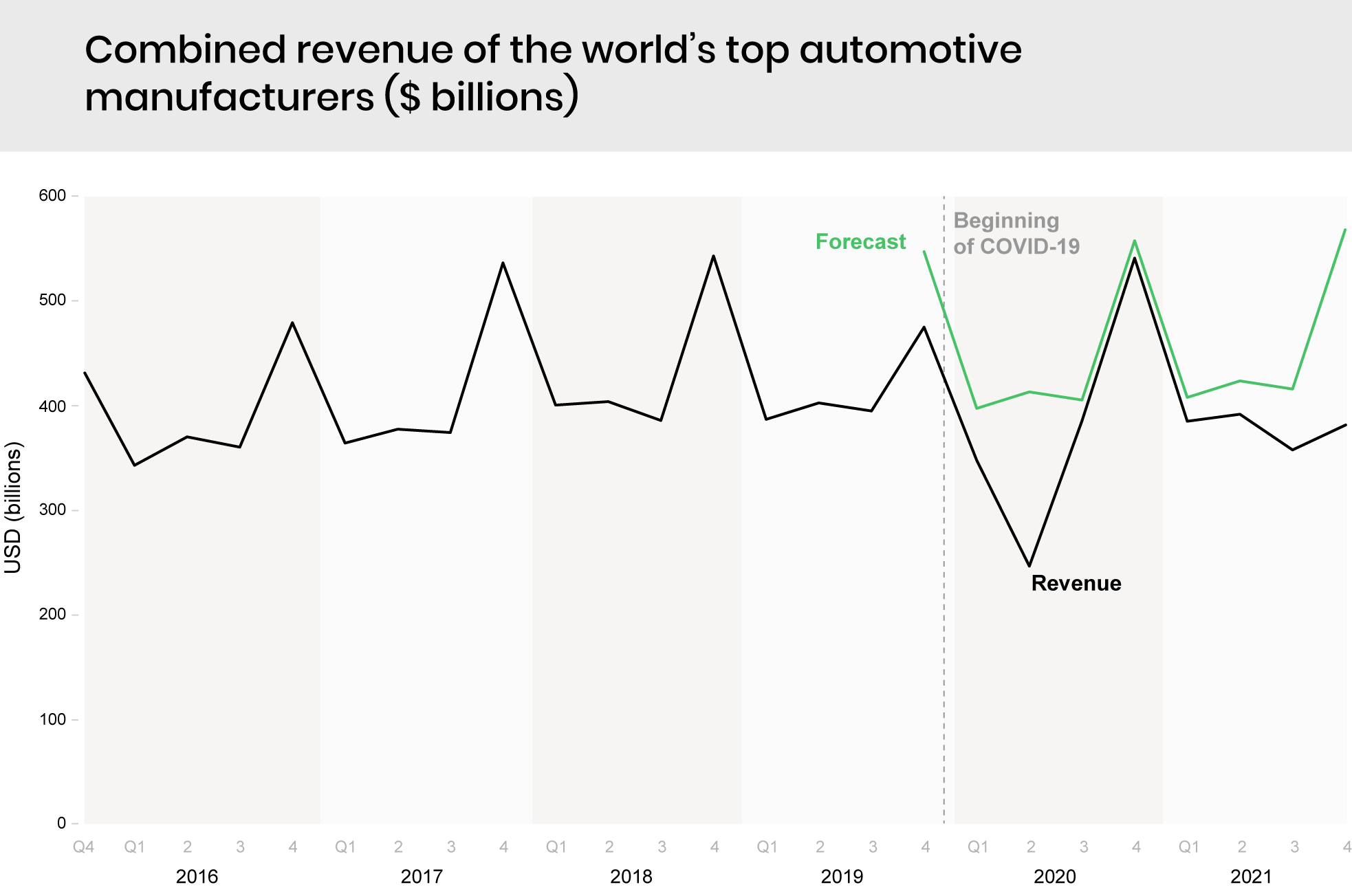
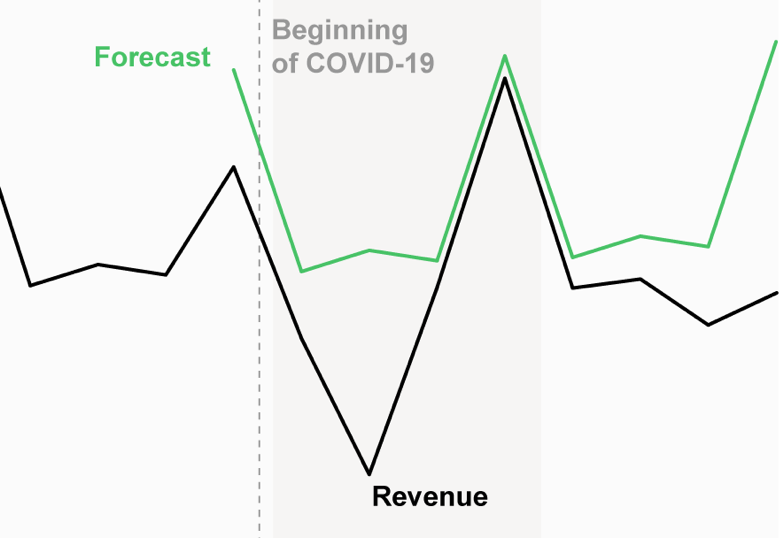
The gap between the 2 lines (projection and reality) contains the main story. The automotive industry lost over $500 billion in revenue.
We also included quotes from the company’s supply chain experts in the story, giving further insight into why these shortages were happening and what automotive companies could do about it.
As a result, the supply chain manger from one of the largest automotive brands in the world got in touch, saying ‘We saw this thing you made, and we were wondering if you could help us with our supply chain.’
First of all, I absolutely LOVE that person for mentioning the campaign when they called!!! That doesn’t normally happen.
Secondly, this shows how content can take someone all the way through the buyer’s journey, from awareness to action, if the connections are clear for the audience to make.
So often, content marketing campaigns seem to sit purely in the awareness phase, and don’t really speak to the audience’s challenges, the problems the business is uniquely positioned to help them with, igniting their desire to find out more.
But if you get everything lined up, and you deliver the right message to the right people in the right places, the reader can join the dots for themselves – between the content, your business, and how you can help.
I feel just as proud of this content as any viral campaigns we’ve made. More so, even. Although this didn’t hit the same metrics in terms of reach, it had a really strong through line, from the insights to the expert commentary to the company’s value proposition.
The content had a strong sense of integrity to it. A backbone.
And that feels good. It feels right.
That’s content you can really be proud of.