The Emergency Stop Game
| 1,587 | Pieces of Coverage |
| 729,646 | Facebook Engagements |
| 10,876,504 | Visits |
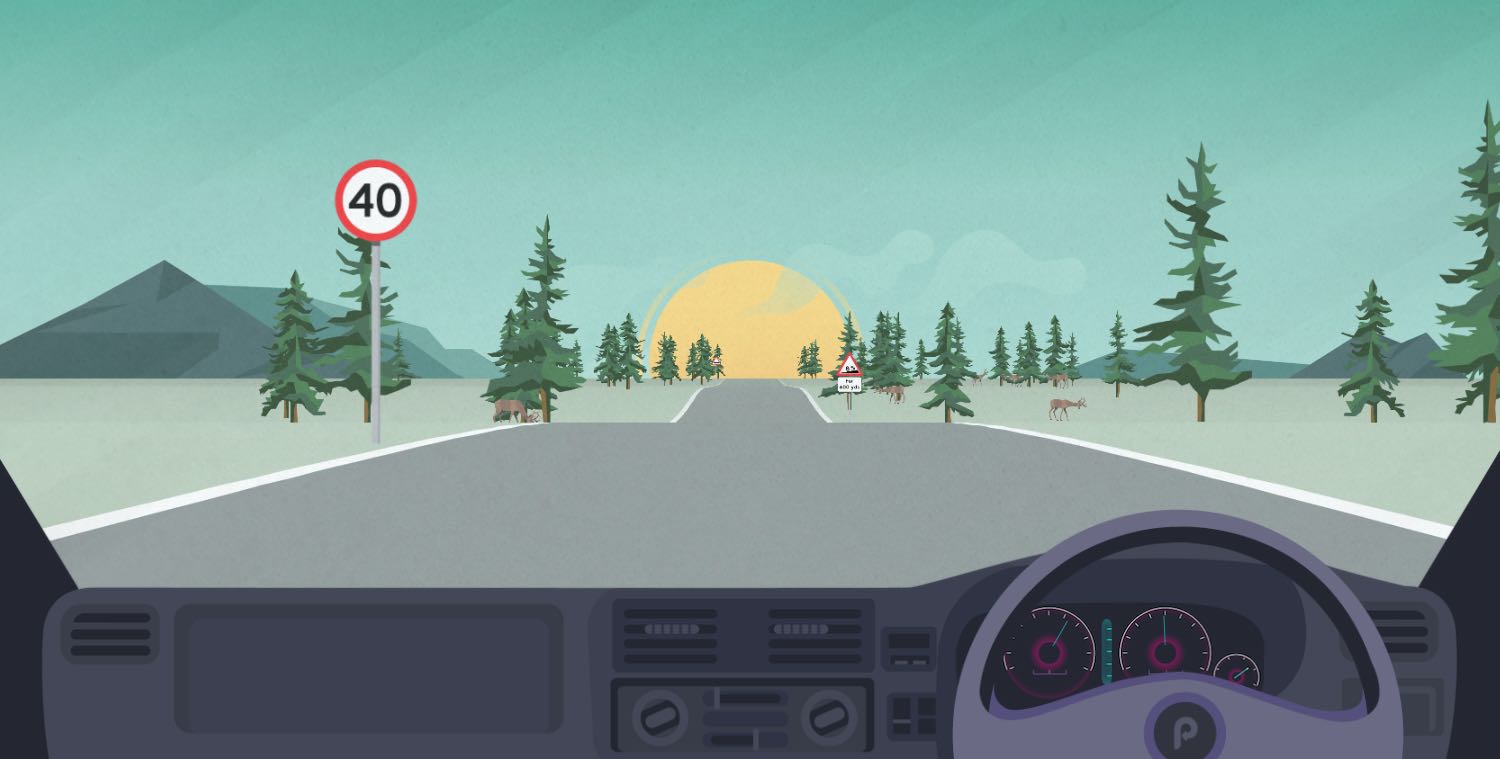
The game that became a story
JustPark are like the AirBnB of car parking – if you’ve got a spare parking space, you can rent it out to drivers via the JustPark platform.
One day, while thinking about content for drivers, my colleague Matt Round wondered, ‘Would you still pass your driving test if you sat it today?’
This is something people often talk about. And as an early idea, Matt wondered whether we could create a game that recreated a driving test to see how well you’d do.
But when we discussed the idea, I thought the game would take too long. Would anyone really stick with it long enough to get the answer? Would the return on investment be worth it?
In the early stages of the creative process, it can be helpful to keep ideas alive, so I quickly flipped the challenge into a question:
‘What would be the simplest version of this we could do?’
We sat with this for a while… and then it struck me — the emergency stop test!
This is part of the British driving test, in which the examiner raises their hand and the driver has to quickly brings the car to a halt.
We had recently product a viral hit with a drumming game to see how well you keep rhythm. The emergency stop game was similar in essence. But selling in the story of a game is not easy.
Despite the fact, our first game (Got Rhythm) was featured in over 900 sites, we didn’t secure one piece of that coverage manually – not one! All of the links came as a result of it going viral on Facebook and Reddit. Which was great (and a relief!) but also provided an important lesson.
If we wanted top tier coverage for the Emergency Stop Game, we needed more of a story.
So we did some exploring to see which sites had written about reaction times previously. We discovered they tended to be loosely science-based.
We also wondered, ‘What affects your reaction times?’
In response to that, we discovered a bunch of scientific studies that revealed some common factors affecting your reactions.
These included things like your age, how much sleep you had last night, how many units of alcohol you drink each week, how much caffeine you’ve consumed that day, and whether you’re left-handed or right-handed (left-handed people are faster apparently).
So we decided to recreate those tests by getting a sample of 2,000 people to play the game and record their score. And we asked them questions about the different factors that might affect their reaction times.
The stats and insights this generated gave journalists plenty to write about.
Now we had a story, and not just a game!
Publications like to cover engaging formats, especially ones that will send lots of traffic their way, but they need a reason to do so. So that’s what we gave them.
Here’s how the game played out:
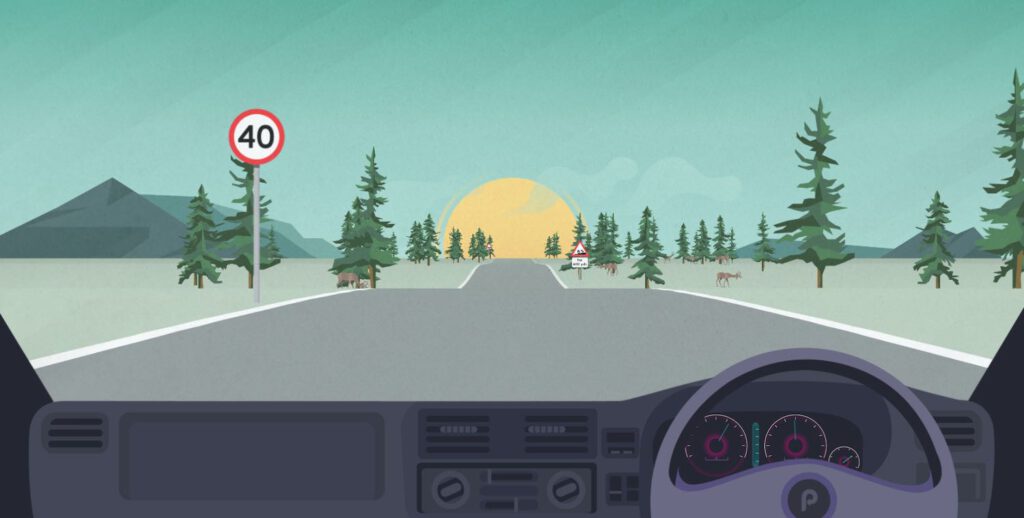
After receiving some instructions, the game starts and you’re driving along…
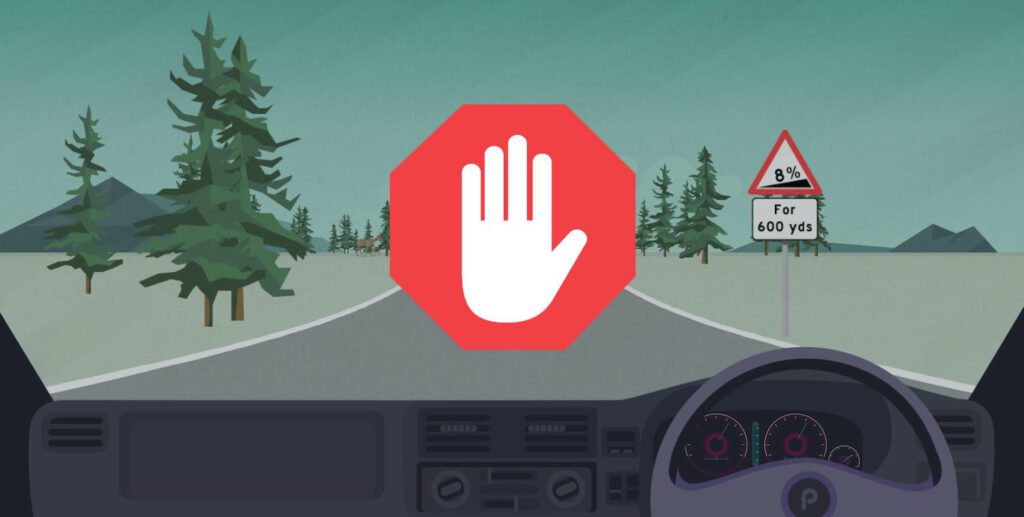
When the stop sign appears, you hit any key (or the screen) to STOP!
Then based on our survey, the game guesses how old you are…
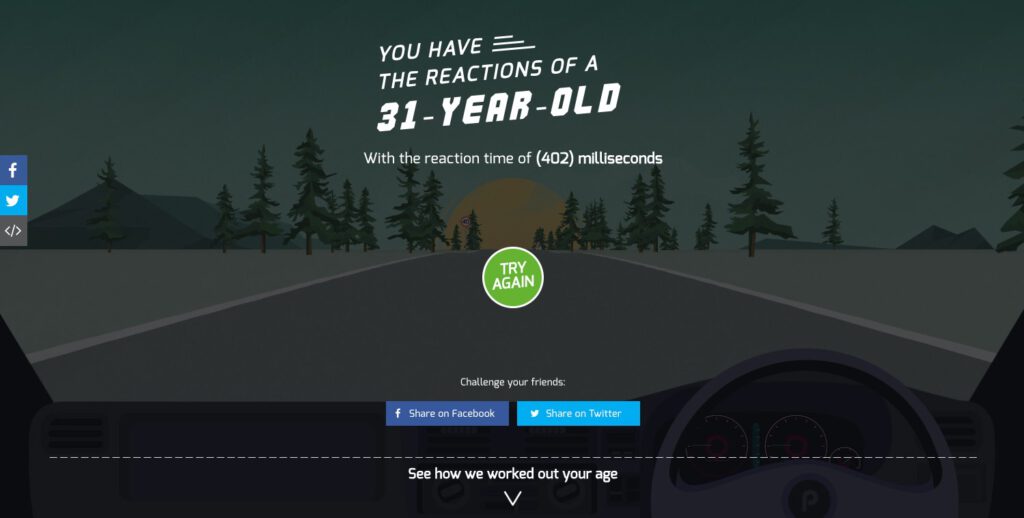
Flattered? Offended? Think you can do better?
Within weeks of its release, the game had over 250,000 Facebook engagements and quickly became our fastest spreading viral hit. IFL Science sent more than half a million visits in one day!
It ended up being featured in 1,587 publications and received over 729,000 Facebook engagements and 10.8 million visits.
“A fun (and frustratingly addictive) driving game”
The Telegraph
Featured in…
IFL Science, HuffPo, Metro, The Independent, The Sunday Times, The Telegraph, UNILAD… and 1,580 more publications
Featured in…